This report consolidates differential expression results across cell types and five brain regions (Cortex, Hippocampus, Hypothalamus, Thalamus, White Matter).
DE testing. For each cell type and brain region, cells were pseudobulk-aggregated per sample using AggregateExpression() on the Xenium raw-counts assay (integer counts, no normalisation). Differential expression was then tested with DESeq2 via Seurat’s FindMarkers(test.use = "DESeq2"), comparing Adu vs IgG. Regions with fewer than two biological replicates per group were excluded. Genes with adjusted p-value < 0.1 were considered significant.
Code
library(tidyverse)library(pheatmap)library(patchwork)library(UpSetR)# auto-discover all per-cell-type DEG CSVscsv_files <-list.files("deg_number", pattern ="\\.csv$", full.names =TRUE)deg_wide <-map(csv_files, read_csv, show_col_types =FALSE) |>list_rbind()# extract region names from the _total columnsregions <-str_remove(names(deg_wide)[str_detect(names(deg_wide), "_total$")], "_total")# pivot total counts to long formatdeg_total <- deg_wide |>select(cell_type, ends_with("_total")) |>pivot_longer(-cell_type, names_to ="region", values_to ="total") |>mutate(region =str_remove(region, "_total"))# pivot up/down counts to long formatdeg_long <- deg_wide |>select(cell_type, ends_with("_up"), ends_with("_down")) |>pivot_longer(-cell_type, names_to ="col", values_to ="genes") |>mutate(direction =if_else(str_detect(col, "_up$"), "Up", "Down"),region =str_remove(col, "_(up|down)$") ) |>select(-col)# count genes per cell_type/region/directiondeg_counts <- deg_long |>mutate(count =map_int(genes, \(x) {if (is.na(x) || x =="") 0L elselength(str_split_1(x, ",\\s*")) })) |>select(cell_type, region, direction, count)
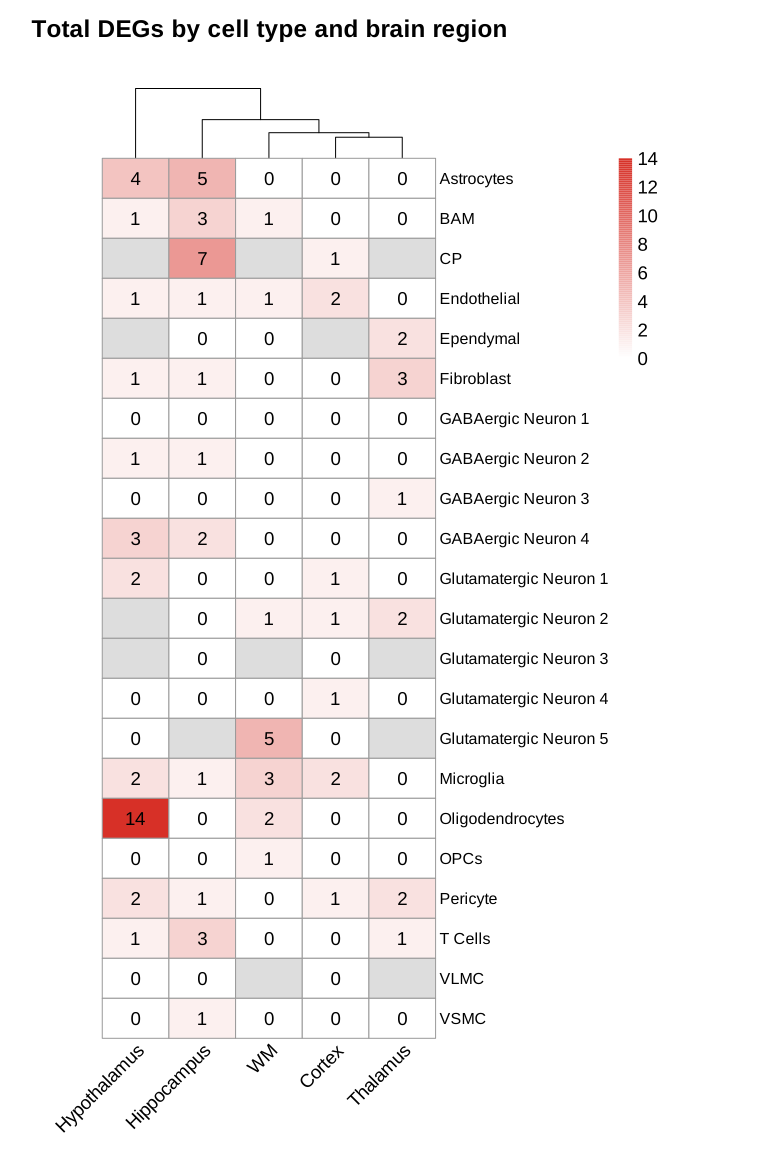
Total DEGs per cell type and region
Hierarchically clustered heatmap of total DEG counts (padj < 0.1) across all cell types and brain regions. Rows and columns are clustered to highlight similarities. Numbers inside cells indicate the count of significant DEGs.
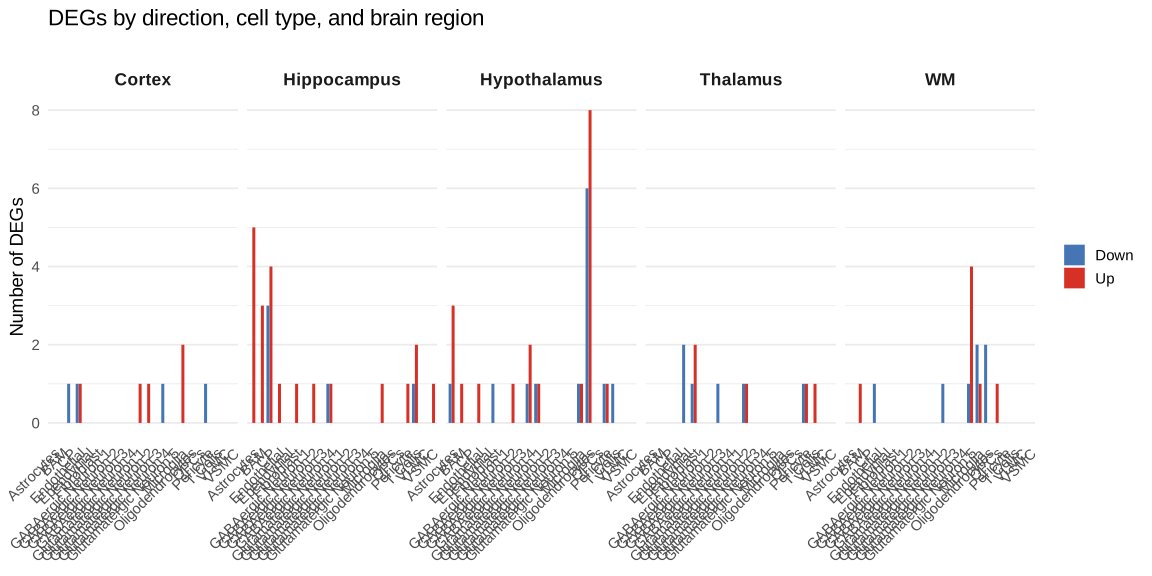
Dodged bar chart showing the number of upregulated and downregulated DEGs for each cell type, faceted by brain region. This allows comparison of directionality across cell types within each region.
Code
deg_counts |>ggplot(aes(x = cell_type, y = count, fill = direction)) +geom_col(position ="dodge", width =0.7) +facet_wrap(~ region, nrow =1) +scale_fill_manual(values =c(Up ="#d73027", Down ="#4575b4")) +labs(title ="DEGs by direction, cell type, and brain region\n",x =NULL,y ="Number of DEGs",fill =NULL ) +theme_minimal(base_size =14) +theme(axis.text.x =element_text(size =11, angle =45, hjust =1),panel.grid.major.x =element_blank(),strip.text =element_text(size =13, face ="bold") )
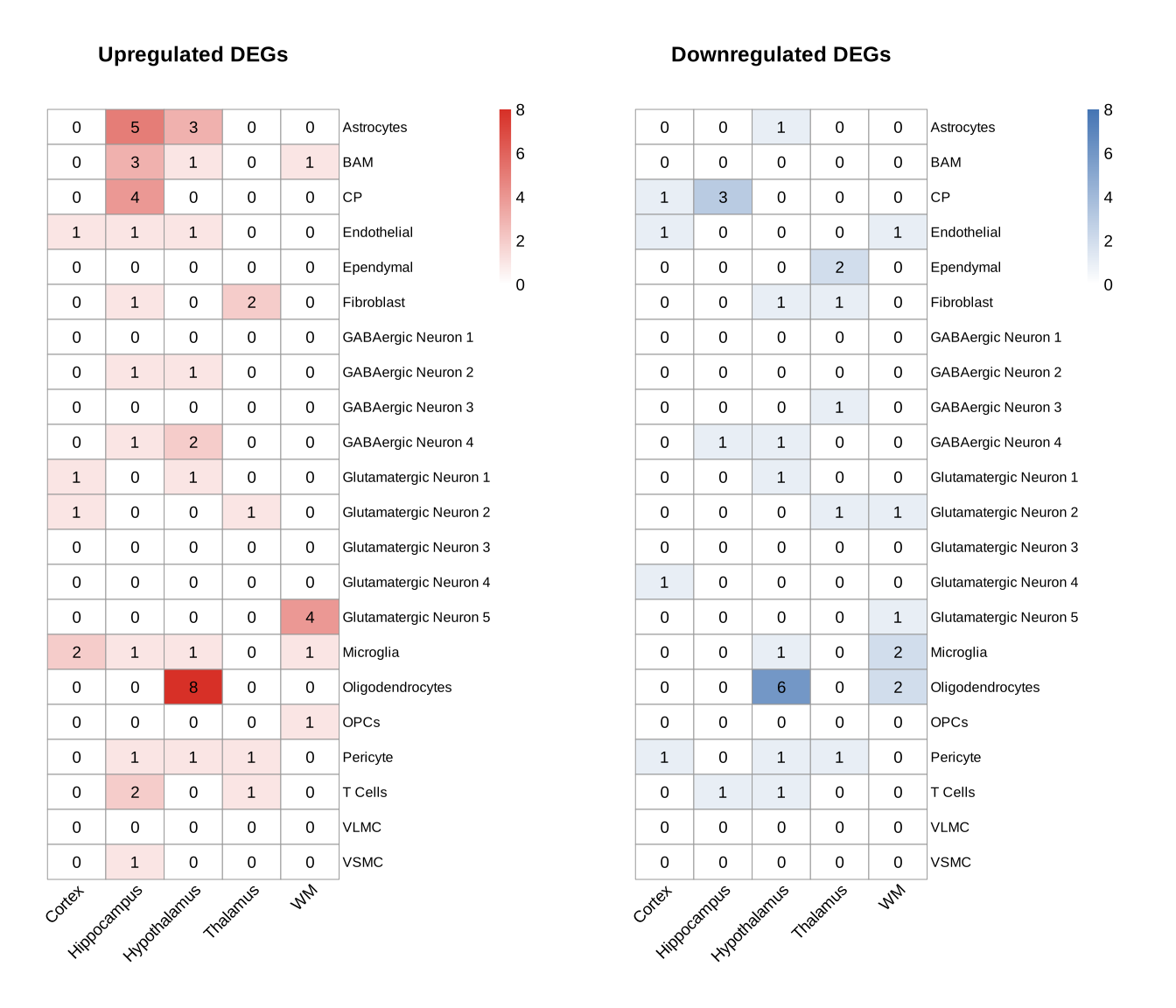
Up and Down heatmaps
Side-by-side heatmaps of upregulated and downregulated DEG counts, allowing comparison of directionality patterns across cell types and regions.
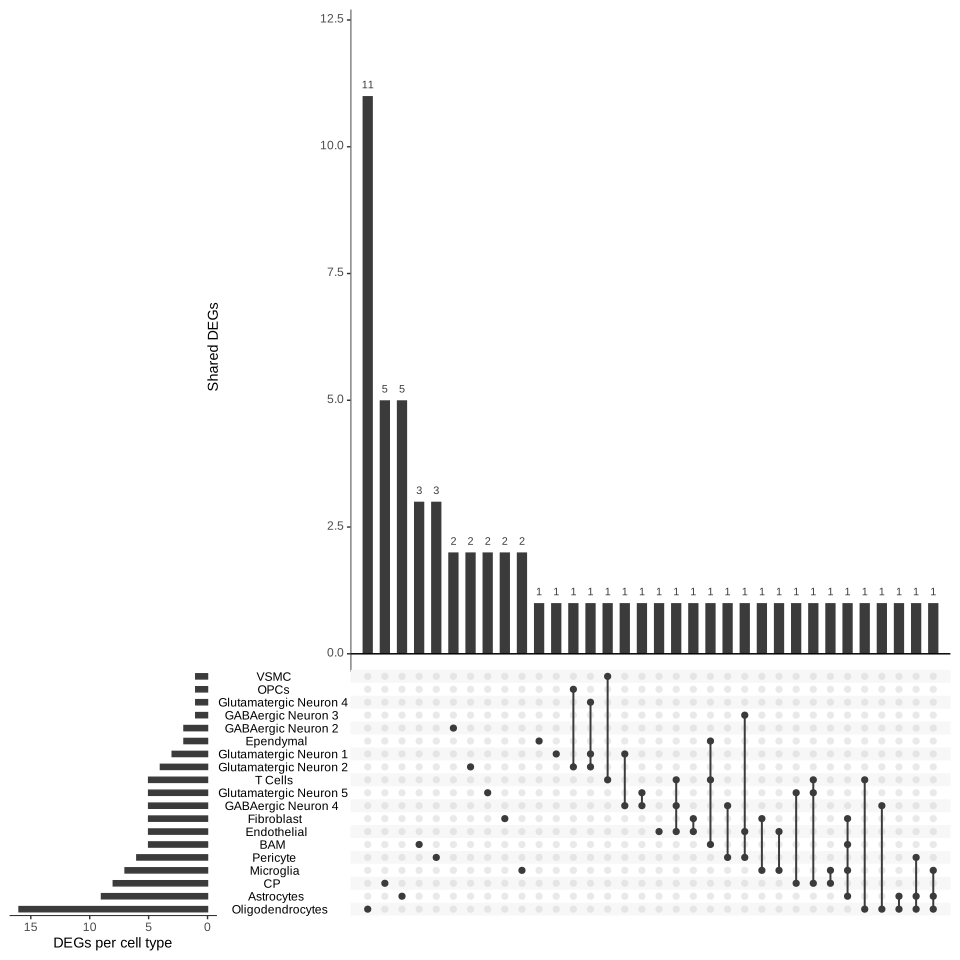
For each brain region, identify DEGs shared across multiple cell types. Genes appearing in more than one cell type within the same region may indicate conserved responses to treatment.
Code
# parse gene lists into a tidy data framegene_df <- deg_long |>filter(!is.na(genes) & genes !="") |>mutate(gene =str_split(genes, ",\\s*")) |>unnest(gene) |>select(cell_type, region, direction, gene)# for each region, count how many cell types share each geneshared_genes <- gene_df |>distinct(cell_type, region, gene) |>group_by(region, gene) |>summarise(n_cell_types =n(),cell_types =paste(cell_type, collapse =", "),.groups ="drop" ) |>filter(n_cell_types >1) |>arrange(region, desc(n_cell_types))if (nrow(shared_genes) >0) { shared_genes |> kableExtra::kbl(caption ="DEGs shared across cell types within each brain region",col.names =c("Region", "Gene", "# Cell types", "Cell types") ) |> kableExtra::kable_styling("striped", full_width =FALSE)} else {cat("No DEGs shared across multiple cell types in any region.")}
DEGs shared across cell types within each brain region
Region
Gene
# Cell types
Cell types
Cortex
Cd74
2
Endothelial, Microglia
Cortex
Fezf2
2
Glutamatergic Neuron 2, Glutamatergic Neuron 4
Cortex
Lamp5
2
Endothelial, Pericyte
Hippocampus
Ccl12
4
Astrocytes, BAM, Fibroblast, Microglia
Hippocampus
Slc17a7
2
GABAergic Neuron 4, T Cells
Hippocampus
Ttr
2
CP, T Cells
Hypothalamus
Apod
3
Astrocytes, Oligodendrocytes, Pericyte
Hypothalamus
Mdh2
3
Astrocytes, Microglia, Oligodendrocytes
Hypothalamus
Abca1
2
Astrocytes, Oligodendrocytes
Hypothalamus
Cldn5
2
BAM, T Cells
Hypothalamus
Lypd1
2
GABAergic Neuron 4, Oligodendrocytes
Hypothalamus
Ptgds
2
GABAergic Neuron 4, Glutamatergic Neuron 1
WM
Cldn11
2
Glutamatergic Neuron 2, OPCs
Code
# UpSet plot: for each region with shared genes, show cell-type overlaps# pool all genes across regions for global cell-type overlap viewgene_by_ct <- gene_df |>distinct(cell_type, gene) |>mutate(present =1) |>pivot_wider(names_from = cell_type, values_from = present, values_fill =0) |>as.data.frame()if (nrow(gene_by_ct) >1&&ncol(gene_by_ct) >2) {upset(gene_by_ct,sets =setdiff(names(gene_by_ct), "gene"),order.by ="freq",text.scale =1.3,mainbar.y.label ="Shared DEGs",sets.x.label ="DEGs per cell type" )} else {cat("Not enough overlap data for UpSet plot.")}